
Start Early, Teach It Often!
Rethinking Science Communication Across the Lifespan


Science communication matters at every age, but we treat it as optional at both ends of life. At the professional end, it’s a skill we never formally teach: scientists and physicians are expected to communicate with audiences ranging from patients to colleagues to grant funders but are never formally trained in communication skills to seamlessly transition their technical jargon into approachable language. At the other end, we barely do it at all. We wait until children are in school to introduce science formally. Those earliest years are when children absorb everything, full of curiosity and wonder and primed to learn, and we let that critical window slip by. During the earliest years of life, we too often miss the opportunity to nurture a lasting connection with science.
The cost of this is not abstract. Even after a decade or more of training, most scientists were never taught to explain their work to anyone outside their field, and the result is public confusion, eroding trust, and discoveries that never translate into real-world impact. At the other end, a generation encounters science for the first time with limited exposure and few real-life role models to help them see themselves within it.
Science deserves to be shared with everyone, at every age. That means training the scientists and healthcare professionals at one end, and not forgetting the youngest audience at the other.
Nurturing Wonder: Introducing Science in Early Childhood
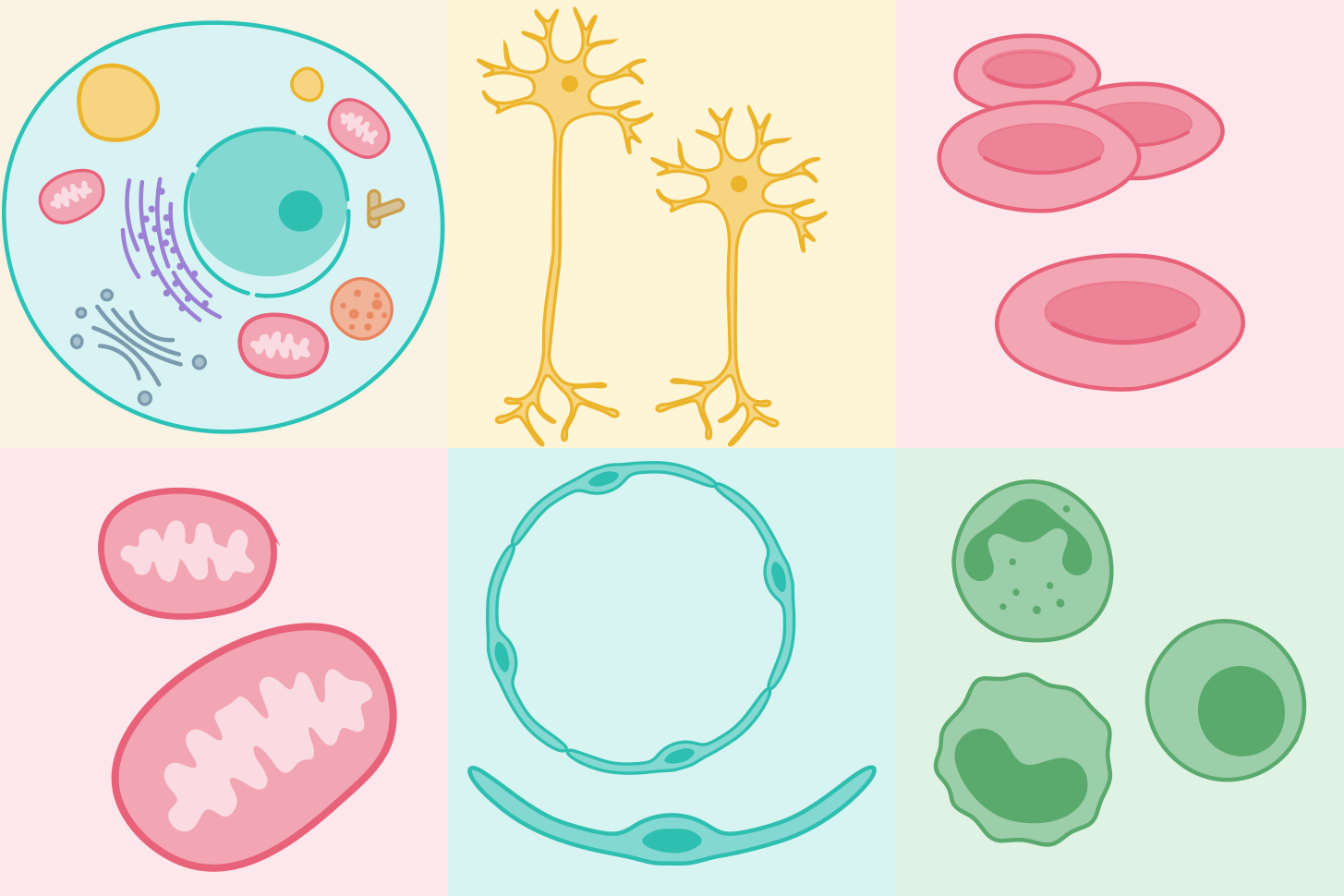
I, Leah, am a cell biologist by training, and for much of my PhD and postdoc I sat in dark rooms at a microscope, looking at cells. I found them fascinating, and beautiful, and I kept wanting to show the people around me what I was actually doing all day. So I started illustrating the cells I was seeing, and that turned into a whole career in visual science communication, away from the bench and into design.
Becoming a parent changed my audience. I wanted to share cell biology with my toddler, and realized there was not much out there to do it with. There are shelves of books about tractors, dinosaurs and farm animals, yet barely anything about the world we are actually made of. So I started Lupe - a free library of printable science for babies and toddlers.
I show my daughter cells the same way I show her animals and cars - not to teach her biology, but I would love for a cell to become one of the ordinary things in a child’s world, no stranger than a car or a dog. At this age it is not going to be about comprehension, but about familiarity. We don’t usually teach biology until high school, and by then it can already feel like something that is not for them, something reserved for clever people. I want that familiarity to be there long before that idea has a chance to set in, and to enter a child’s world during the window when they are most open to curiosity and wonder.
The first person who talks to a kid about science is almost always a parent, and most parents aren’t scientists, many of them lack confidence about it. So half of what Lupe is really doing is giving the parents the words and the material to have the conversation at all.
Every pack also has a high-contrast black-and-white set, made for newborns, who see bold contrast before they can focus on color.
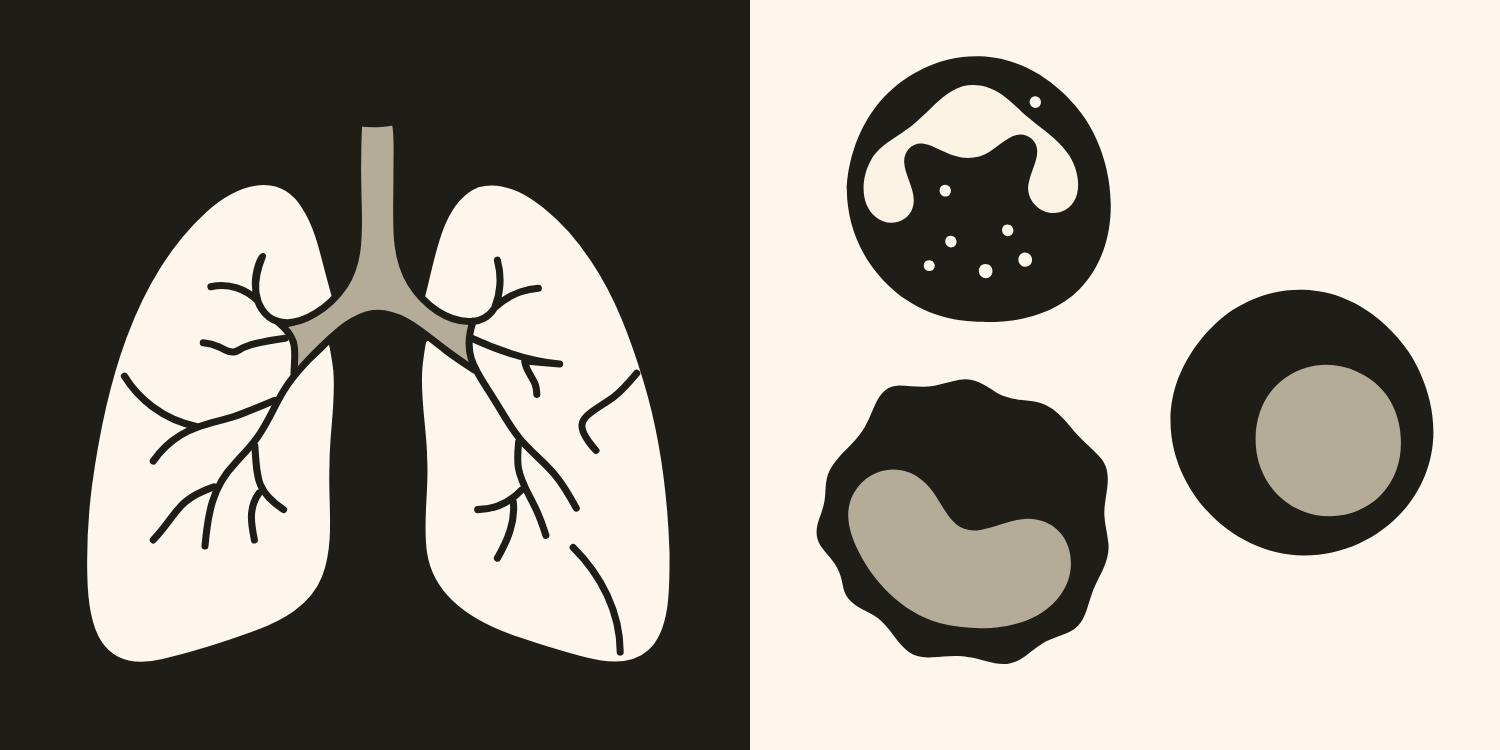
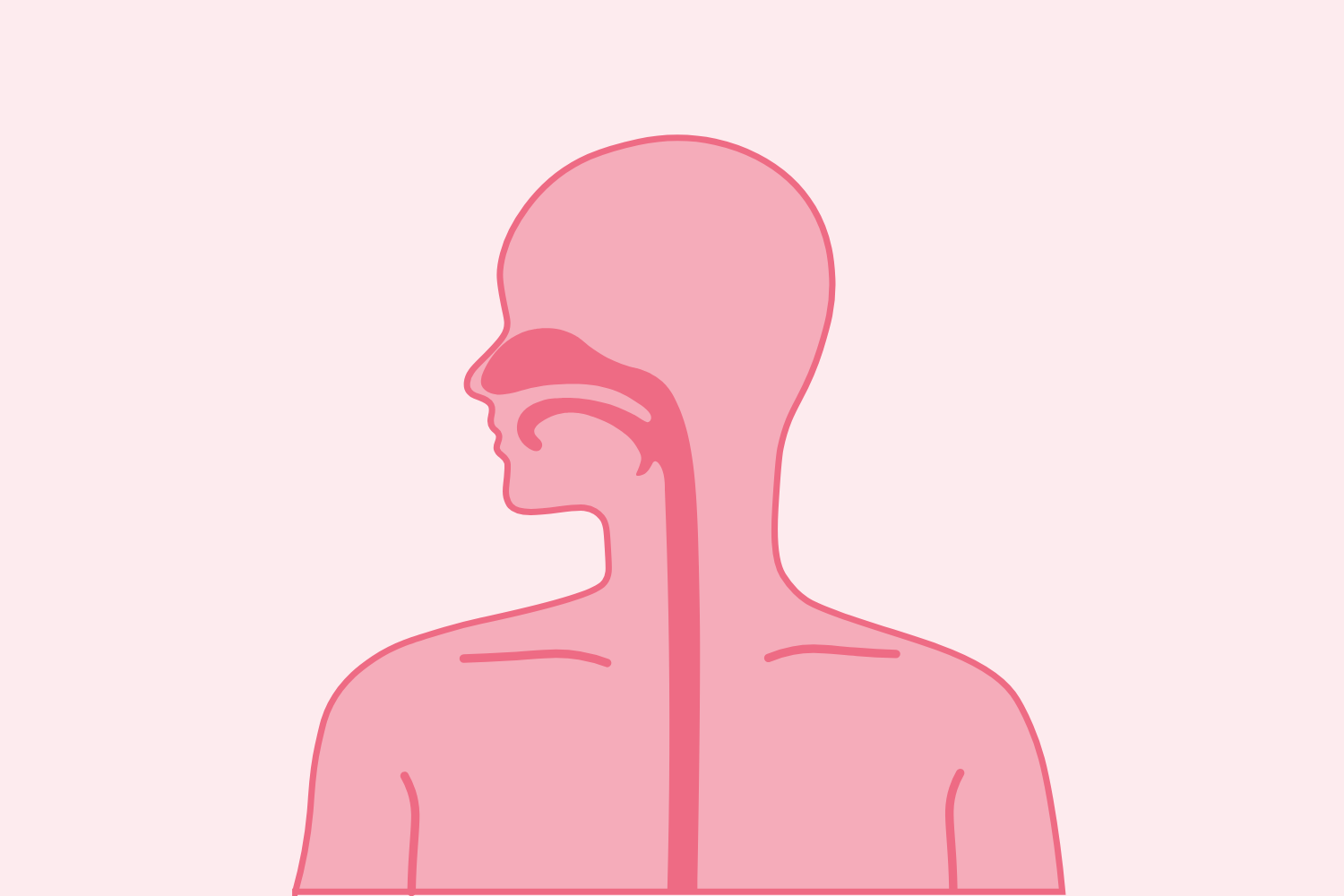
With Lupe, I design all my illustrations to keep them from looking like education - no arrows or labels, nothing that reads like a textbook, nothing clinical or scary. I adapt the language so a small child or a non-scientist can follow it, but I still call things what they are: I don’t say “food slide,” I say “esophagus.” I don’t think esophagus is any harder for a two year old than helicopter, they are both just long words for a real thing. A child who can say dinosaur, or even tyrannosaurus, can say esophagus too.
If we make the words ordinary early, and put them in the parent’s hands instead of waiting for the classroom, science is not something a child encounters for the first time in school, but part of the background of their world from the start.
But making science familiar in those first years only opens the door. Keeping it open takes people trained to talk about their work all the way up the chain, and that is the part of the system we have neglected for just as long.
Beyond the Bench: Embedding Communication in Scientific Training
I, Aimee, spent 16 years becoming a scientist and in all that time, not a single minute of my required training was devoted to learning how to communicate my work to the people outside of the walls of academia or paywalls of scientific journals.
Ironically, my own entry point into science communication didn’t come through formal training at all. It started at home. When my twins were young, I found myself wanting to explain what I did as an immunologist in ways they could understand. I simplified, translated, and reimagined complex ideas into stories and visuals. By age 10, my daughter produced a strikingly accurate drawing of an immune response (below). She depicted immune cells interacting with bacteria, signals firing, and defenses mobilizing. It was clear evidence that when scientific ideas are embedded early and communicated thoughtfully, people of any age can grasp even complex biological systems.
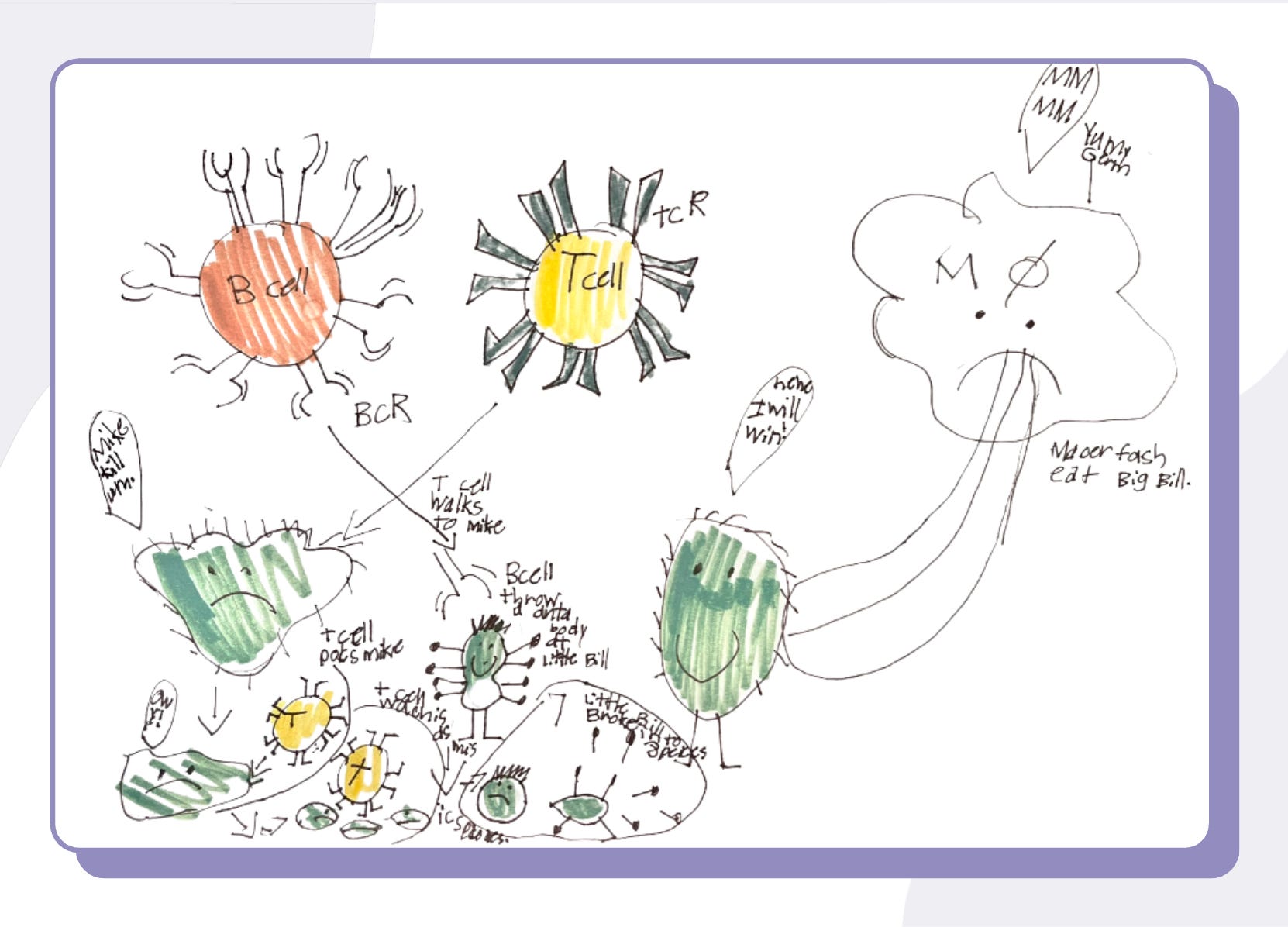
Since earning my PhD in 2001, I’ve learned that the absence of communication training weakens the very ecosystem that science depends on to move forward. A lack of public understanding and trust carries institutional and societal costs. Funding priorities often depend on public and political support, yet the people responsible for advancing knowledge are rarely equipped to advocate for it in ways that resonate beyond academic audiences. Scientific innovation may be stalled because its meaning and relevance are not accessible.
This gap is most visible at the top of the training pipeline, among established researchers who are experts in their fields but have limited experience with public dialogue. This raises a more fundamental question: where should this skill have developed? If scientists reach the end of their formal training without learning to communicate broadly, the issue is not a late-stage omission but a systemic one.
One possibility is that science communication should be integrated much earlier in professional training: during undergraduate education, in graduate programs, or even as part of laboratory culture itself. Embedding communication as a core scientific competency (rather than an optional add-on) would signal that explaining one’s work is not separate from doing it.
Another possibility reaches further back still. If curiosity, storytelling, and audience awareness were cultivated from early education onward, future scientists might never see communication as an external demand, but as an intrinsic part of how knowledge is created and shared.
Ultimately, the question is not simply when scientists should learn to communicate, but why the system has long treated this skill as unnecessary. Addressing that question invites a reimagining when and where communication skills should be embedded within the training pathway so that the ability to connect science to society is part of its core and developed from the very beginning.
From Insight to Action…
Science communication across the lifespan does two things at once: it protects curiosity at the start of a life and rebuilds trust at the height of a career.
If you’re a parent or caregiver of a young child, you don’t need a science background to begin. Start now, in the ordinary, everyday moments, and use whatever helps, Lupe’s printable science library is free for exactly this. Make the words familiar early, and you give a child the sense that science was theirs all along.
And if you’re an academic leader or a scientist in training, it’s time to treat communication as a core scientific skill rather than an optional extra, and to build it into curricula and professional expectations. Our work isn’t finished when we’ve shared it with colleagues, at conferences, and behind the paywalls of journals. It’s finished when we’ve made it understandable to the people it’s meant to serve. That is how we rebuild trust in science, and there has never been a more important time to do it.
Two ends of one life, and the same simple commitment: talk about science with the people in front of you, in language they can actually understand.
 | A guest post by
|
If a child l can say dinosaur, or even tyrannosaurus, why would we not encourage them to say esophagus also?
OMG it's such an equally parallel concept... eventually we master saying the word ambulance, which is certainly a linguistic skill. In addition the latter has a colloquial difference in the enunciation of the 2nd vowel.
Various Substacks & authors in recent months (my observation) have highlighted & offered insights into improving our (HCP & science academics) communication skills. I complement each of you with helping to address what may be a fundamental gap in how we educate our children. I also believe there is a dark irony this growing need to be better communicators stems from the flood of mis/disinformation since 2020 & particularly in light of the current federal (primarily) government in the US.
My formal education is obviously science/medical. I struggle to better understand economics. Novels will be written about recent global affairs. There is one fundamental economic concept... supply & demand...the hyperbole of DJT (numerous) aside, the global & regional supply of oil/gas will require months to be replenished.
JJF Phm 🇨🇦